What happens when you run out of spoons?
Spoon Theory is a metaphor used by many people living with chronic illness to describe the limited energy available to them each day. Each spoon represents a unit of energy. Everyday activities—getting dressed, preparing a meal, going to work, or simply navigating the world—require a spoon. For someone living with chronic illness, that supply is finite. Tasks that others may complete without a second thought can require careful calculation, difficult choices, and consequences that last long after the task is finished.
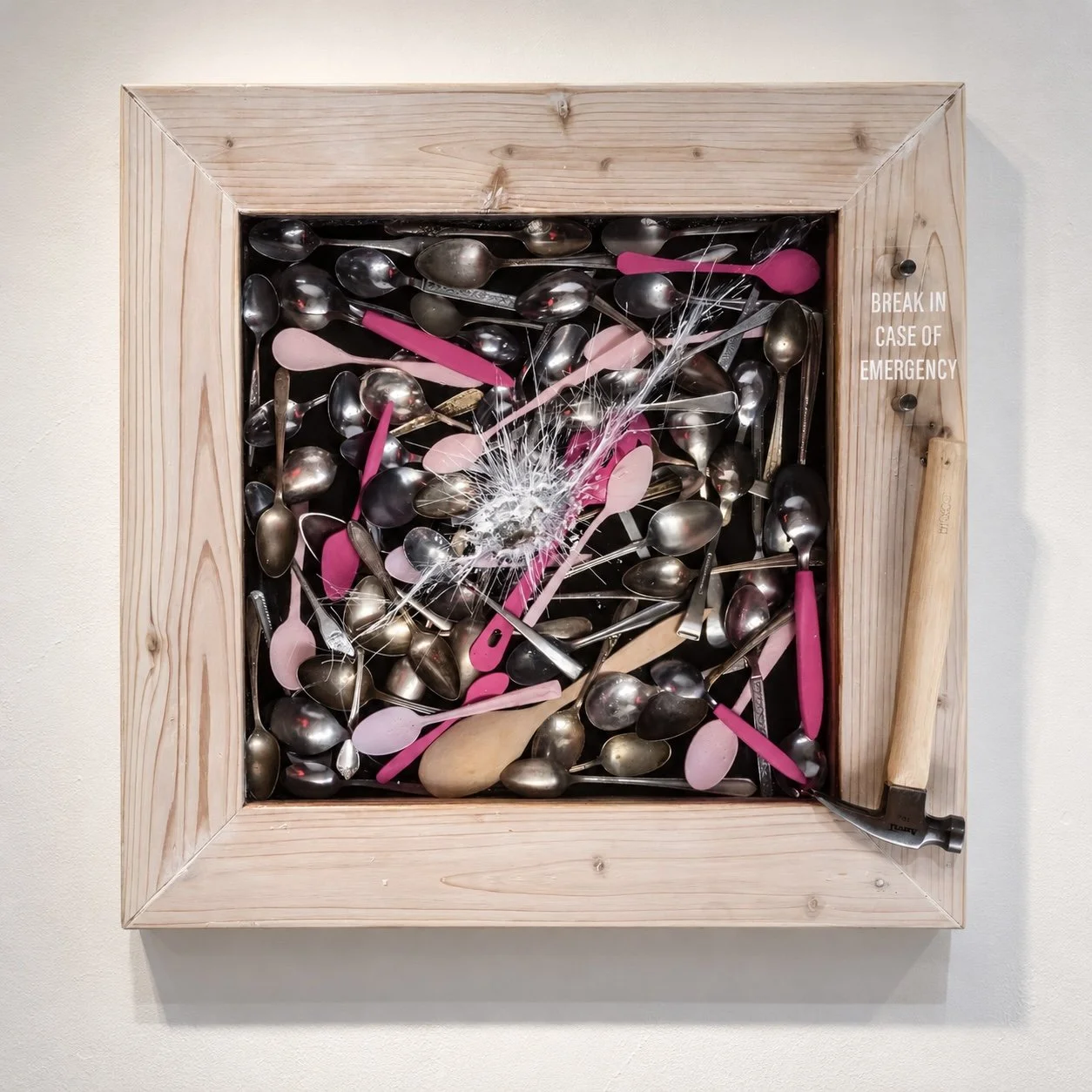
In this assemblage, spoons become more than a measure of energy. They represent the constant demands placed on a body already working overtime. The pink utensils interrupt the metallic mass, a reminder of the gendered experience of illness and the women who must continually navigate a world that often misunderstands their limitations.
At the center, shattered glass radiates outward like a breaking point. It is the moment when the accumulated demands become too much and when the body can no longer absorb another expectation, another obligation, or another demand to keep going.
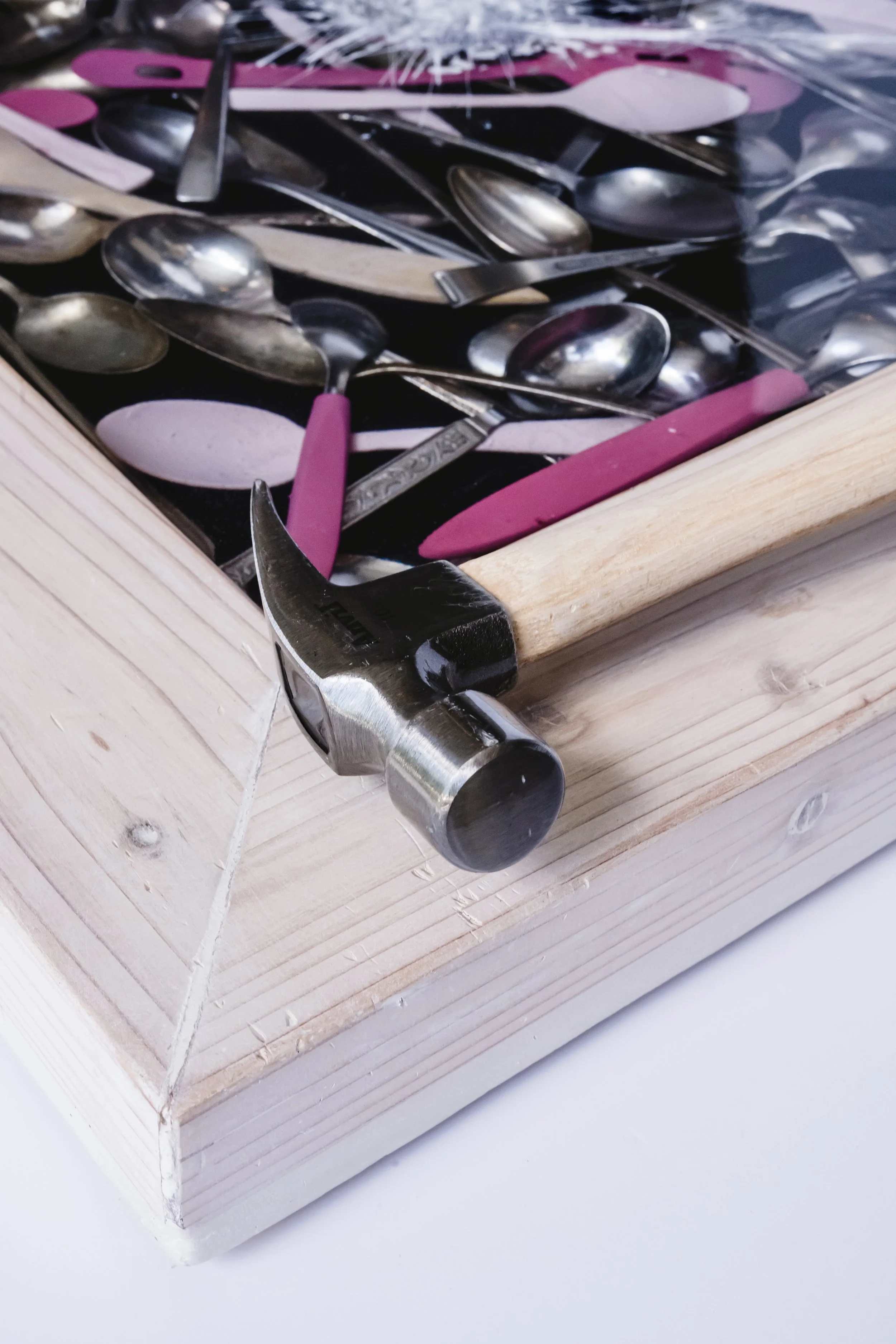
The words “Break in Case of Emergency” transform the familiar emergency box into a question: What happens when the emergency is invisible? When the person who needs help looks fine? When there is no obvious sign that every available spoon has already been spent?
The wooden frame holds the chaos in place, creating the appearance of containment. But containment is not the same as healing, and holding everything together is not the same as being okay.
This work invites viewers to consider the cost of invisible illness, the exhaustion of constantly rationing energy, and the breaking points that can exist behind an ordinary appearance.
Sometimes, the emergency is not a single moment. Sometimes, it is the accumulation of every day that came before it.
Break in Case of Emergency
24 by 24 inchesMixed Media Assemblage