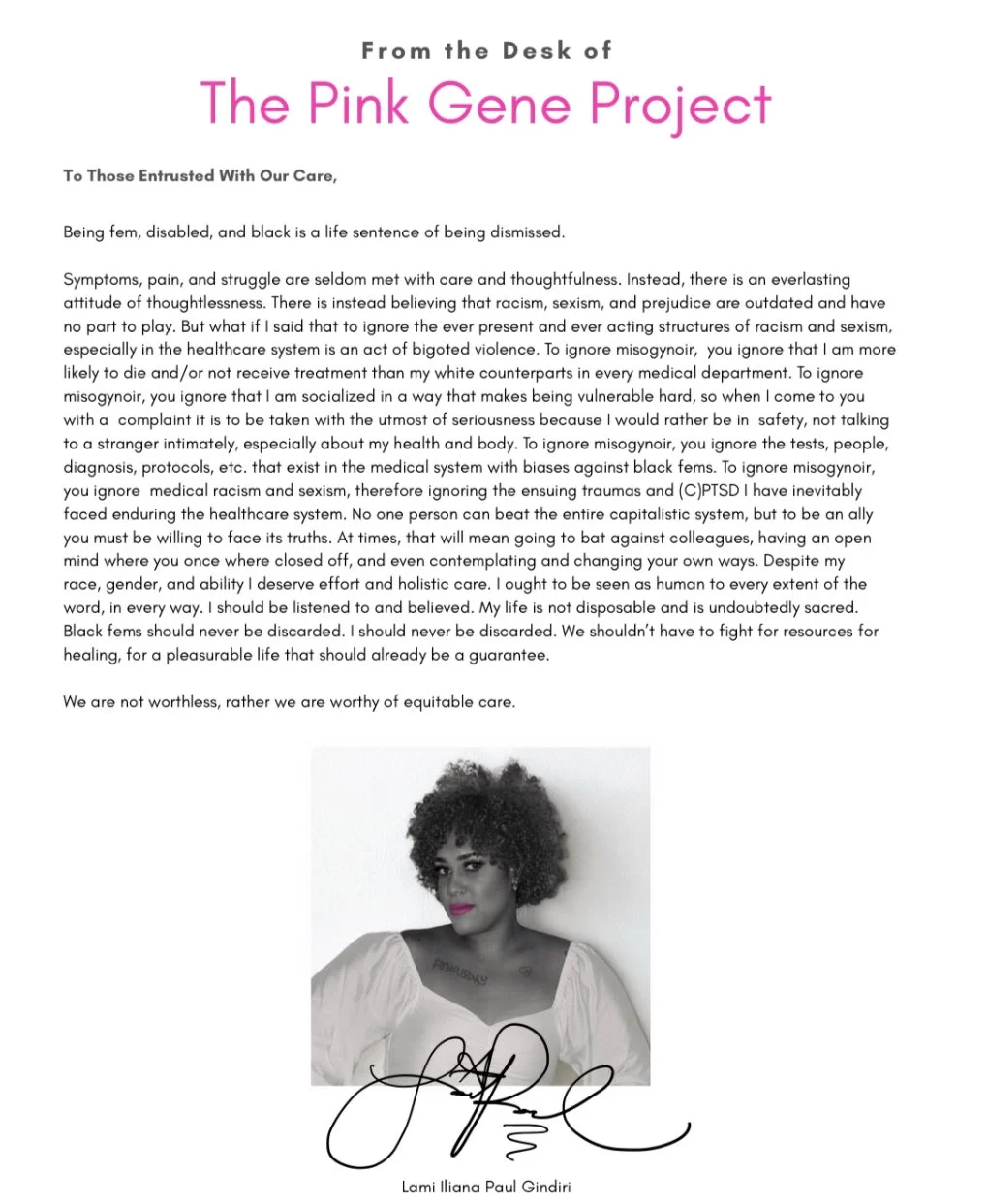
Lami Iliana Paul Gindiri
Being fem, disabled, and black is a life sentence of being dismissed.
Symptoms, pain, and struggle are seldom met with care and thoughtfulness. Instead, there is an everlasting attitude of thoughtlessness. There is instead believing that racism, sexism, and prejudice are outdated and have no part to play. But what if I said that to ignore the ever present and ever acting structures of racism and sexism, especially in the healthcare system is an act of bigoted violence. To ignore misogynoir, you ignore that I am more likely to die and/or not receive treatment than my white counterparts in every medical department. To ignore misogynoir, you ignore that I am socialized in a way that makes being vulnerable hard, so when I come to you with a complaint it is to be taken with the utmost of seriousness because I would rather be in safety, not talking to a stranger intimately, especially about my health and body. To ignore misogynoir, you ignore the tests, people, diagnosis, protocols, etc. that exist in the medical system with biases against black fems. To ignore misogynoir, you ignore medical racism and sexism, therefore ignoring the ensuing traumas and (C)PTSD I have inevitably faced enduring the healthcare system. No one person can beat the entire capitalistic system, but to be an ally you must be willing to face its truths. At times, that will mean going to bat against colleagues, having an open mind where you once where closed off, and even contemplating and changing your own ways. Despite my race, gender, and ability I deserve effort and holistic care. I ought to be seen as human to every extent of the word, in every way. I should be listened to and believed. My life is not disposable and is undoubtedly sacred. Black fems should never be discarded. I should never be discarded. We shouldn’t have to fight for resources for healing, for a pleasurable life that should already be a guarantee.
We are not worthless, rather we are worthy of equitable care.
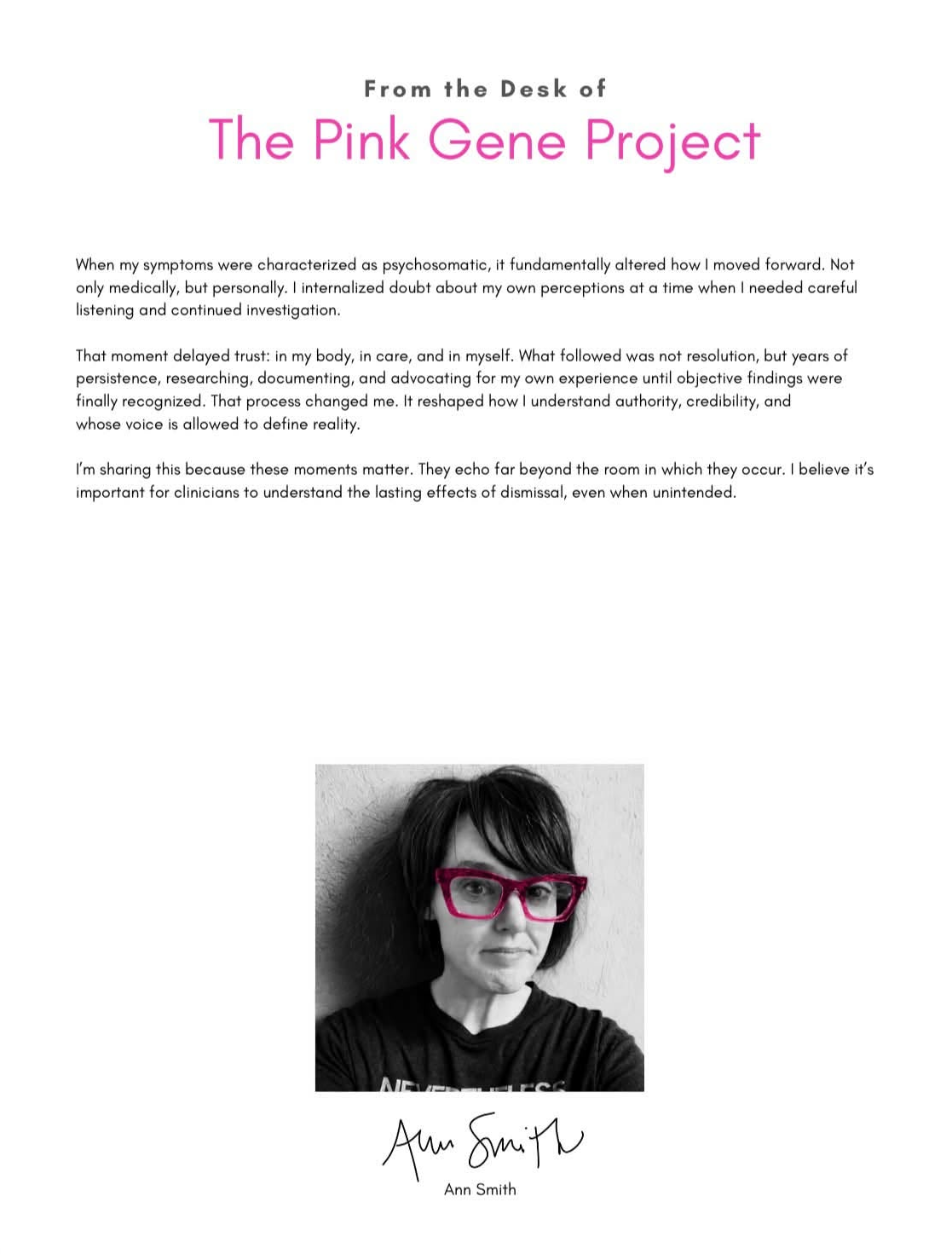
Ann Smith
When my symptoms were characterized as psychosomatic, it fundamentally altered how I moved forward. Not only medically, but personally. I internalized doubt about my own perceptions at a time when I needed careful listening and continued investigation.
That moment delayed trust: in my body, in care, and in myself. What followed was not resolution, but years of persistence, researching, documenting, and advocating for my own experience until objective findings were finally recognized. That process changed me. It reshaped how I understand authority, credibility, and
whose voice is allowed to define reality.
I’m sharing this because these moments matter. They echo far beyond the room in which they occur. I believe it’s important for clinicians to understand the lasting effects of dismissal, even when unintended.